Best Cat Litter for Kittens: 5 Unscented Picks and What Vets Advise

A buyer's guide built from specifications, warranties and return policies, not hands-on testing. Facts and prices checked November 6, 2026. We may earn a commission if you buy through links on this page. It never changes what we recommend. As an Amazon Associate we earn from qualifying purchases. How we research
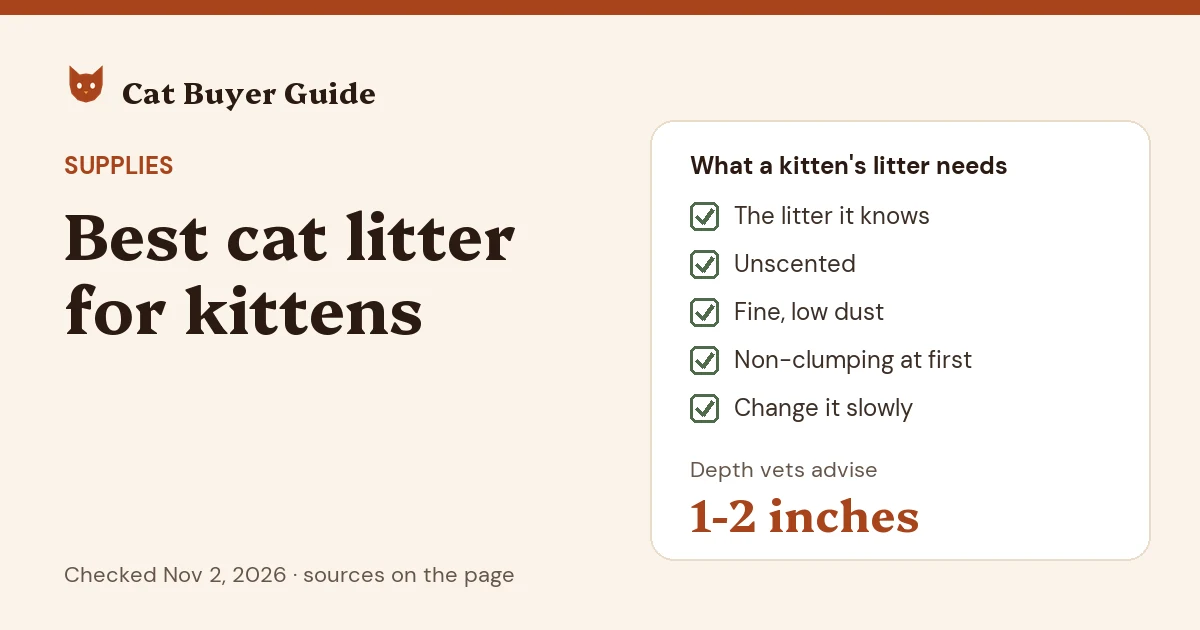
What’s the best cat litter for kittens? Start with the litter your kitten already knows, and if you’re choosing fresh, an unscented, fine-grained clumping litter, about 1 to 2 inches deep. That is what the AAHA/AAFP life stage guidelines, Cornell’s Feline Health Center and the ASPCA advise. For very young kittens that still taste or play in their litter, use a non-clumping litter such as paper or pine pellets until they stop, then switch gradually.
Below are the criteria with their sources, and five unscented litters that meet them: three clumping (clay, corn and wheat) and two non-clumping (paper and pine). This is a buyer’s guide, not a hands-on test: we don’t own a cat, and every product detail comes from the maker’s own page, checked on November 2, 2026.
The short answer
- Best overall for most kittens: Dr. Elsey’s Ultra Unscented, a clumping clay litter with no perfumes.
- Plant-based clumping: World’s Best Cat Litter Comfort Care Unscented (corn) or sWheat Scoop Original (wheat).
- Non-clumping, for kittens still learning: Fresh News Original (paper) or Feline Pine Original (pine).
- Whatever you choose: unscented, 1 to 2 inches deep, and changed over slowly from the litter your kitten used before.
What vets advise for a kitten’s litter
Keep what your kitten knows. Litter preferences form early in kittenhood, says International Cat Care (iCatCare), so a cat is happiest with the material it got used to as a kitten (iCatCare). The AAHA/AAFP guidelines tell vets to have owners start with unscented clumping sand-type litter, the litter the kitten was already using, or both (AAHA/AAFP 2021). Ask the breeder or shelter what they use before pickup day.
Unscented. Most cats prefer unscented litter, say Cornell, the ASPCA and the AAHA/AAFP guidelines, which add that some cats find scented litters strongly off-putting. FelineVMA notes that many cats dislike scented or dusty litters and litter deodorizers (FelineVMA).
Fine and clumping, once your kitten is past the tasting stage. Cats generally prefer clumping litter with a medium to fine texture, says the ASPCA, and iCatCare says a fine, sand-like litter is likely closest to what cats instinctively favor. Clumps also make it easy to scoop every day.
Non-clumping while kittens are learning. Best Friends Animal Society’s kitten foster manual says to use only non-clumping litter, such as pine pellets or clay, when kittens start using a box, because they often try to eat it while they learn (Best Friends). Its litter section draws the line at eight weeks: use only non-clumping litter with kittens younger than that, because very young kittens taste their litter and play in it. If your kitten still eats litter when it comes home, keep it on non-clumping and ask your vet.
Shallow. Cornell and the ASPCA say one to two inches, not three or four, and iCatCare cites research showing cats prefer about 3 cm (just over an inch). Some makers’ directions say to fill deeper: go by the vets.
Change slowly. If you switch brands, Cornell says to do it gradually, mixing small amounts of the new litter into the old. The ASPCA suggests offering two litters side by side and letting your cat choose.
The criteria at a glance
| What to look for | Why | Sources |
|---|---|---|
| The litter it knows | Preferences form early in kittenhood | iCatCare, AAHA/AAFP, ASPCA |
| Unscented | Most cats prefer it; scents can put cats off | Cornell, ASPCA, AAHA/AAFP, FelineVMA |
| Fine, clumping | Cats prefer medium to fine clumping litter | ASPCA, iCatCare, AAHA/AAFP |
| Non-clumping at first | Learning kittens often eat litter | Best Friends |
| Low dust | Many cats dislike dusty litter | FelineVMA |
| 1 to 2 inches deep | Cats prefer a shallow layer | Cornell, ASPCA, iCatCare |
Five unscented litters that meet the criteria
Every detail below comes from the maker’s own page. We don’t list prices, and we didn’t test any of these.
| Litter | Material | Clumping? | Maker says |
|---|---|---|---|
| Dr. Elsey’s Ultra | Clay | Yes | Unscented, no perfumes or deodorants, 99% dust-free |
| World’s Best Comfort Care Unscented | Corn | Yes | Unscented, 99% dust-free, lightweight |
| sWheat Scoop Original | Wheat | Yes | No dyes or perfumes, 99.5% dust free |
| Fresh News Original | Recycled paper pellets | No | Baking soda added, 99% dust-free |
| Feline Pine Original | Pine pellets | No | No synthetic perfumes, 100% natural pine |
1. Best overall: Dr. Elsey’s Ultra Unscented
Dr. Elsey’s Ultra is a clumping clay litter that the maker describes as unscented and 99% dust-free, controlling odor without perfumes or deodorants. It combines medium-grain clay with heavier granules meant to cut tracking, and forms hard clumps for scooping. Of the five, it is closest to the “unscented clumping sand litter” the AAHA/AAFP guidelines name for kittens.
Best for: kittens past the litter-tasting stage, and homes that want one litter from kittenhood on.
Watch out for: the bag’s directions say to fill 3 to 4 inches. Cornell and the ASPCA say one to two inches suits most cats.
 See Dr. Elsey’s Ultra Unscented on Amazon
2. Plant-based clumping (corn): World’s Best Cat Litter Comfort Care Unscented
World’s Best makes its Comfort Care Unscented litter from corn. The maker calls it quick clumping, 99% dust-free and lightweight. It’s a clumping option for owners who’d rather not use clay, and it has no added scent; the brand’s lavender versions do, so pick the unscented bag.
Best for: a lighter, plant-based clumping litter for a kitten past the tasting stage.
Watch out for: a corn litter looks and feels different from clay. If your kitten came from a home that used clay, mix it in slowly, as Cornell advises.
 See World’s Best Comfort Care Unscented on Amazon
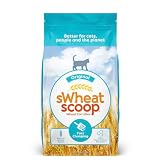
3. Plant-based clumping (wheat): sWheat Scoop Original
sWheat Scoop Original is made of wheat only (“Nothing but wheat!”, the maker says), with no dyes, perfumes or chemicals. The maker lists it as strong clumping, 99.5% dust free and low tracking, and pitches the Original at single-cat homes.
Best for: a one-kitten home that wants a natural clumping litter with nothing added.
Watch out for: the directions say to fill 4 inches; the vets’ 1 to 2 inches is the better start. The maker says it smells like wheat, so it isn’t scent-free in the strict sense, though nothing is added. Its own California note asks owners not to flush litter: put used litter in the trash.
 See sWheat Scoop Original on Amazon
4. Non-clumping paper: Fresh News Original
Fresh News makes its cat litter from 100% recycled paper, as soft pellets that don’t clump. The maker says it is 99% dust-free and low tracking, with baking soda built in for odor. A non-clumping pellet fits the foster-manual advice for kittens that still taste their litter.
Best for: young kittens still learning to use a box, or a kitten that came from a home using paper pellets.
Watch out for: non-clumping litter can’t be scooped clean the same way, so change it more often: iCatCare says weekly for non-clumping litter, against every 2 to 4 weeks for clumping. The baking soda is a deodorizer, and FelineVMA says many cats dislike those. Buy the Original: Fresh News’s Multi-Cat version adds a Fresh Linen scent.
 See Fresh News Original on Amazon
5. Non-clumping pine: Feline Pine Original
Feline Pine’s non-clumping litter is made from 100% natural pine, with no harsh chemicals or synthetic perfumes, the maker says. Pine pellets are one of the two non-clumping litters the Best Friends foster manual names for kittens. The maker also describes a slow switch: an inch of pine under one to two inches of the old litter, using less of the old over three or four changes.
Best for: young kittens still learning, and owners who want a non-clumping, plant-based litter.
Watch out for: pine has its own natural smell, and Amazon lists the scent as “Pine”. Pellets feel far from the fine, sand-like litter iCatCare says cats favor, so plan to move to a finer litter later, slowly. Feline Pine also sells a clumping version; make sure you get the non-clumping one if that’s what you want.
 See Feline Pine Original on Amazon
How we chose, and what we left out
We started from the vet and welfare sources above, set the criteria, then read each maker’s own product page on November 2, 2026, and opened each Amazon listing to check it was the same product and in stock. We left out:
- Scented litters, including the lavender and “fresh linen” versions of brands above, because the vet sources favor unscented.
- Kitten “attractant” litters with added herbal scent, for the same reason.
- Silica crystals and other litters whose makers’ specifications we couldn’t read in full that day.
A litter isn’t on this list because it sells well, and no maker paid to be here. We earn a small commission if you buy through our Amazon links.
Setting up the box
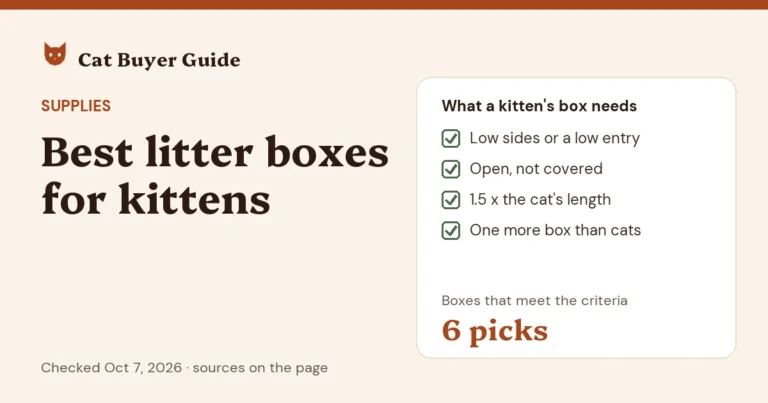
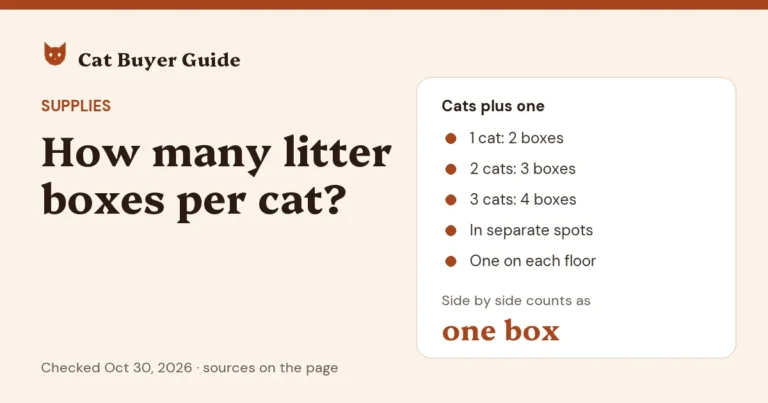
The litter is only half the setup. Young kittens need a box with low sides, says Cornell, and our guide to the best litter box for kittens covers sizes and entry heights. Our litter training guide explains where to put the box and what to do about accidents, and our guide to how many litter boxes per cat covers the “one per cat, plus one” rule. For everything else to buy before pickup day, see our new kitten checklist.
Talk to your vet
- If your kitten keeps eating litter, or stops using the box, talk to your vet: a change in litter habits can have a medical cause, not just a litter preference.
- Ask your vet before switching a kitten with any urinary or bowel problem to a new litter.
Best cat litter for kittens: FAQ
Is clumping litter safe for kittens?
The AAHA/AAFP guidelines suggest unscented clumping litter, or the litter a kitten already knows, as the place to start. The Best Friends foster manual advises only non-clumping litter for kittens under eight weeks, because they often try to eat it while they learn. So: non-clumping while your kitten still tastes its litter, then a gradual move to clumping. If you’re unsure, ask your vet.
What litter do kittens prefer?
Most cats prefer unscented litter with a medium to fine texture, and many prefer clumping, say the ASPCA, Cornell and iCatCare. Preferences form early, so the litter your kitten used before coming home is often its favorite.
How deep should a kitten’s litter be?
About one to two inches, say Cornell and the ASPCA; iCatCare cites research showing cats prefer about 3 cm. Some makers’ directions say to fill 3 or 4 inches, which is deeper than most cats like.
Should I switch my kitten’s litter?
Only if you need to, and slowly. Cornell says to mix small amounts of the new litter into the old. The ASPCA suggests putting two boxes with different litters side by side and letting your kitten choose.
Sources
- AAHA and AAFP: 2021 Feline Life Stage Guidelines (Quimby et al., JFMS, PMC copy), checked Nov 2, 2026
- Cornell Feline Health Center: Feline Behavior Problems: House Soiling, checked Nov 2, 2026
- ASPCA: Litter Box Problems, checked Nov 2, 2026
- FelineVMA: House Soiling (client brochure, 2026 update), checked Nov 2, 2026
- International Cat Care: Choosing a litter tray for your cat (updated Dec. 10, 2025), checked Nov 2, 2026
- Best Friends Animal Society: Kitten foster manual, checked Nov 6, 2026
- Dr. Elsey’s: Ultra Litter, checked Nov 2, 2026
- World’s Best Cat Litter: Comfort Care Unscented (clumping), checked Nov 2, 2026
- sWheat Scoop: Original, checked Nov 2, 2026
- Fresh News: Products, checked Nov 2, 2026
- Feline Pine: Non-Clumping Litter, checked Nov 2, 2026