How to Trim Kitten Nails: A Step-by-Step Guide from Vets

Built from dated data and expert sources, not hands-on pet testing. Facts and prices checked November 7, 2026. We may earn a commission if you buy through links on this page. It never changes what we recommend. As an Amazon Associate we earn from qualifying purchases. How we research
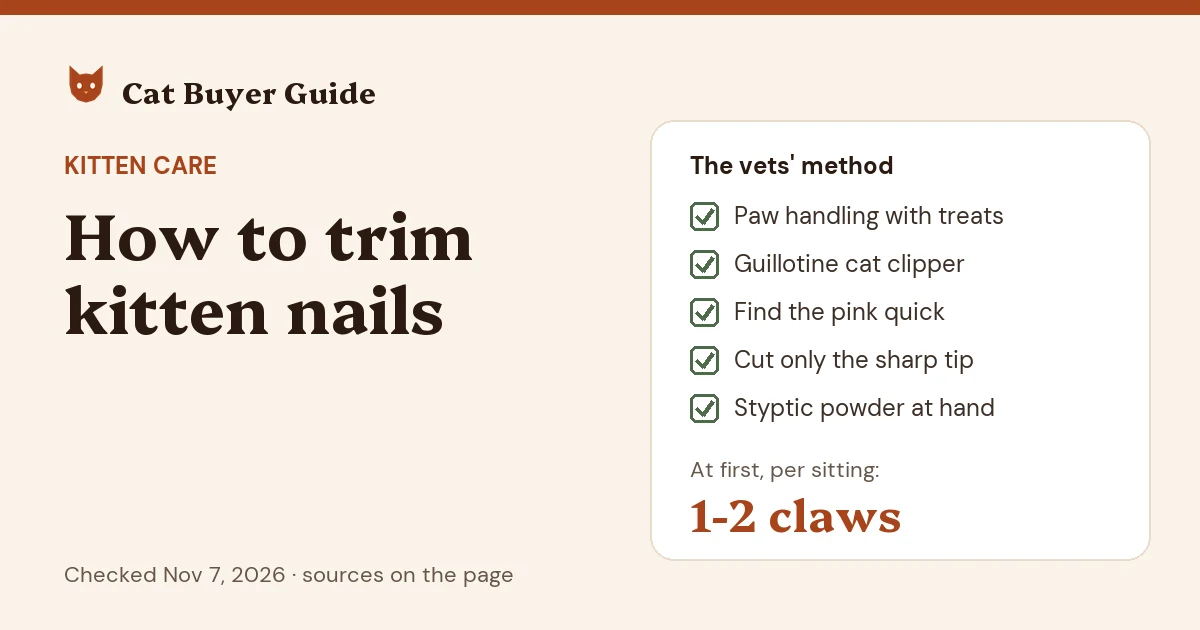
To trim kitten nails, first spend a few weeks teaching your kitten that having its paws handled means treats. Then, when it’s relaxed or sleepy, press a toe pad gently to push the claw out, find the pink quick, and snip off only the sharp, clear tip with a guillotine-style cat clipper. Stop after one or two claws and give a treat. That is the method of the ASPCA and of Washington State University’s veterinary teaching hospital, and WSU suggests learning it first from a vet or vet technician.
Kittenhood is the best time to start. The ASPCA says a cat that starts early is more likely to grow up accepting trims as part of normal grooming, and the AAHA/AAFP kitten guidelines name nail trims among the procedures to introduce gently, gradually and with rewards.
The short answer
- Handle first, trim later. Plan on at least a month of paw handling with treats before full trims (ASPCA).
- Use a cat clipper, guillotine style, never human nail clippers (ASPCA, WSU).
- Cut only the tip: about halfway between the quick and the point (ASPCA), or about 2 mm from the quick (WSU).
- One or two claws a sitting until your kitten is clearly comfortable (ASPCA).
- Keep styptic powder at hand in case you nick the quick (ASPCA, WSU).
- Never yell or punish (ASPCA). Stop and try again another day.
What you need
- Cat nail clippers. The ASPCA’s advice is short: “Cat claws are best trimmed with the guillotine clipper.” WSU agrees that the guillotine type is the easiest to use on cats. Replace the clippers when the blades get dull, because dull blades press harder on the claw. Our cat nail clippers guide compares the types.
- Styptic powder or a styptic stick, to stop bleeding if you cut too short. Without it, WSU says, bleeding may take about 5 minutes to stop.
- A special treat your kitten loves and only gets at trim time. The ASPCA suggests trying a few, such as bits of tuna or cooked chicken liver.
- A quiet spot. The ASPCA says to avoid places where the kitten can watch birds, other pets nearby, or a window where outdoor cats pass.
- A nail file (optional). WSU says one can smooth the cut end.
Picks from our cat nail clippers guide

A guillotine clipper sized for cats: the Resco Professional Guillotine Cat Nail Clippers, with a replaceable blade, per its listing. More in our nail clippers guide.

For a nicked quick: Miracle Care Kwik Stop Styptic Powder, the kind of styptic the ASPCA and WSU say to keep at hand. More in our nail clippers guide.
Links to Amazon, chosen from the makers’ specs in our buyer’s guides. We haven’t tested them, and we may earn a commission if you buy.
Step 1: Get your kitten used to paw handling
This is most of the work, and the ASPCA says to plan on at least a month for it. Pick a time when your kitten is relaxed or sleepy, not right after hard play or a fright.
- Sit with your kitten on your lap, facing away from you.
- Hold one front paw gently and massage it for no more than three seconds.
- Press the toe pad gently so the claw slides out.
- Let go and give a treat at once.
- Repeat four more times, then stop for the day.
Work every other day or every third day, a different toe each time, until you’ve handled every toe on a front paw. If your kitten pulls away, don’t grip or pull back: follow the paw, and hold it for a shorter count next time. The AAHA/AAFP guidelines make the same point for all handling: pair it with food or other rewards, and avoid a stressful first time.
Step 2: Find the quick
With the claw pushed out, look for the pink part near the base. That is the quick, and it has nerves and blood vessels. Cutting into it hurts and bleeds. WSU notes that most cats have light-colored claws, so the quick is easy to see. Practice spotting it during the handling sessions before you ever bring the clippers out.
Step 3: Trim just the sharp tip
When your kitten accepts the handling, bring out the clippers and the treats.
- Press a toe pad to extend one claw.
- Put the tip of the claw through the clipper’s ring, with the clipper at a right angle to the nail and the cutting blade toward you, not the kitten (WSU).
- Cut only the sharp, clear tip. The ASPCA says to aim about halfway between the end of the quick and the point; WSU says to stay about 2 millimeters from the quick.
- Let go and give a treat right away.
If your kitten didn’t seem to notice, you can do one more. The ASPCA says not to trim more than two claws at a sitting until your kitten is obviously comfortable, so a whole set may take several days at first. A second person can help by offering treats.
Kittens with dark claws
If you can’t see the quick, take the claw off in several tiny cuts instead of one, WSU advises, and stop well short of where the quick would be.
Don’t forget the dew claws
The dew claw sits on the inner side of the front paw. It doesn’t touch the ground, so walking doesn’t wear it down, and WSU says it often grows into the skin and causes pain, so cut it regularly. WSU says the scissors-type trimmer is the best tool for dew claws.
If you cut the quick
Stay calm and don’t punish your kitten or yourself. Press styptic powder onto the end of the claw to stop the bleeding, as the ASPCA and WSU advise, give a treat, and end the session. Next time, take less off.
Talk to your vet
- Ask your vet team to show you how to trim at your kitten’s first visits. WSU recommends learning from a vet or vet technician before trying at home.
- See your vet if bleeding doesn’t stop, or if a claw (often a dew claw) has grown into the skin.
- If your kitten stays very stressed by trims despite slow practice, the ASPCA says to ask your vet about medication that lowers stress during nail trims. Only your vet can decide if that’s right.
What not to do
The ASPCA’s list of things to avoid:
- Don’t yell at your kitten or punish it.
- Don’t cut too close to the quick.
- Don’t try to trim every claw at once.
- Don’t trim when you’re upset or your kitten is agitated.
- Don’t use human nail clippers.
How often should you trim kitten nails?
None of the three sources we read gives a set schedule in days or weeks. The ASPCA says kittens haven’t mastered their claws yet and benefit from frequent trimming, and the AAHA/AAFP guidelines note that shorter nails mean less damage to furniture and to people. Trim the sharp tips when you notice them, keep the sessions short, and ask your vet team how often suits your kitten.
Trimming doesn’t replace scratching, which is normal cat behavior. Give your kitten a good post too: our guides to the best scratching post for kittens and to stopping a cat scratching furniture explain what to look for.
How to trim kitten nails: FAQ
How do I trim my kitten’s nails for the first time?
Don’t start with the clippers. Start with a few days of short paw massages and treats, as in step 1. When your kitten relaxes while you push a claw out, trim the tip of one claw, give a treat and stop there.
Can I use human nail clippers on a kitten?
The ASPCA says not to. Use a clipper made for cats; the ASPCA and WSU both say the guillotine type works best on cat claws.
How much of the nail should I cut?
Only the sharp, clear tip. Stay about halfway between the quick and the point (ASPCA), or about 2 millimeters from the quick (WSU).
Is trimming a cat’s nails different from a kitten’s?
The method is the same for cats of any age, and the ASPCA’s handling steps are written for both. Kittens are simply easier to teach, which is why every source we read says to start young.
What if my kitten won’t let me?
Go back to shorter handling sessions (the ASPCA suggests a shorter hold when a cat pulls away), with a favorite treat, at a sleepier time. Never yell or punish. If it doesn’t improve, ask your vet team for help.
How we wrote this guide
We read the claw-trimming pages of the ASPCA and of Washington State University’s Veterinary Teaching Hospital, and the kitten section of the AAHA/AAFP 2021 Feline Life Stage Guidelines, on November 7, 2026. Where the two trimming guides put the cut line in different words, we give both. We don’t own a cat and haven’t tried these steps ourselves. The picks come from our nail clippers buyer’s guide, which compares makers’ and listing specifications, not hands-on use.
Sources
- ASPCA: Trimming Your Cat’s Claws, checked Nov 7, 2026
- Washington State University Veterinary Teaching Hospital: How to clip a cat’s nails (2022), checked Nov 7, 2026
- AAHA and AAFP: 2021 Feline Life Stage Guidelines, behavior and environmental needs of kittens, checked Nov 7, 2026